Skip to content

Constellation

Asset and vulnerability exposure management (CAASM)

Constellation

Alpha open source 2026 - present

Asset and vulnerability exposure management (CAASM)

Constellation brings together asset inventory, vulnerabilities and backup status from Ansible, Trivy, Wazuh, Restic and CVE.radio. The project maps CVEs to affected machines and supports remediation through CI/CD pipelines or ticketing.

  • Python
  • FastAPI
  • PostgreSQL
  • asyncpg
  • Ansible
  • Trivy
  • Wazuh
  • Restic
  • RSS
  • Docker
  • Traefik
  • REST
  • JSON
  • CI/CD
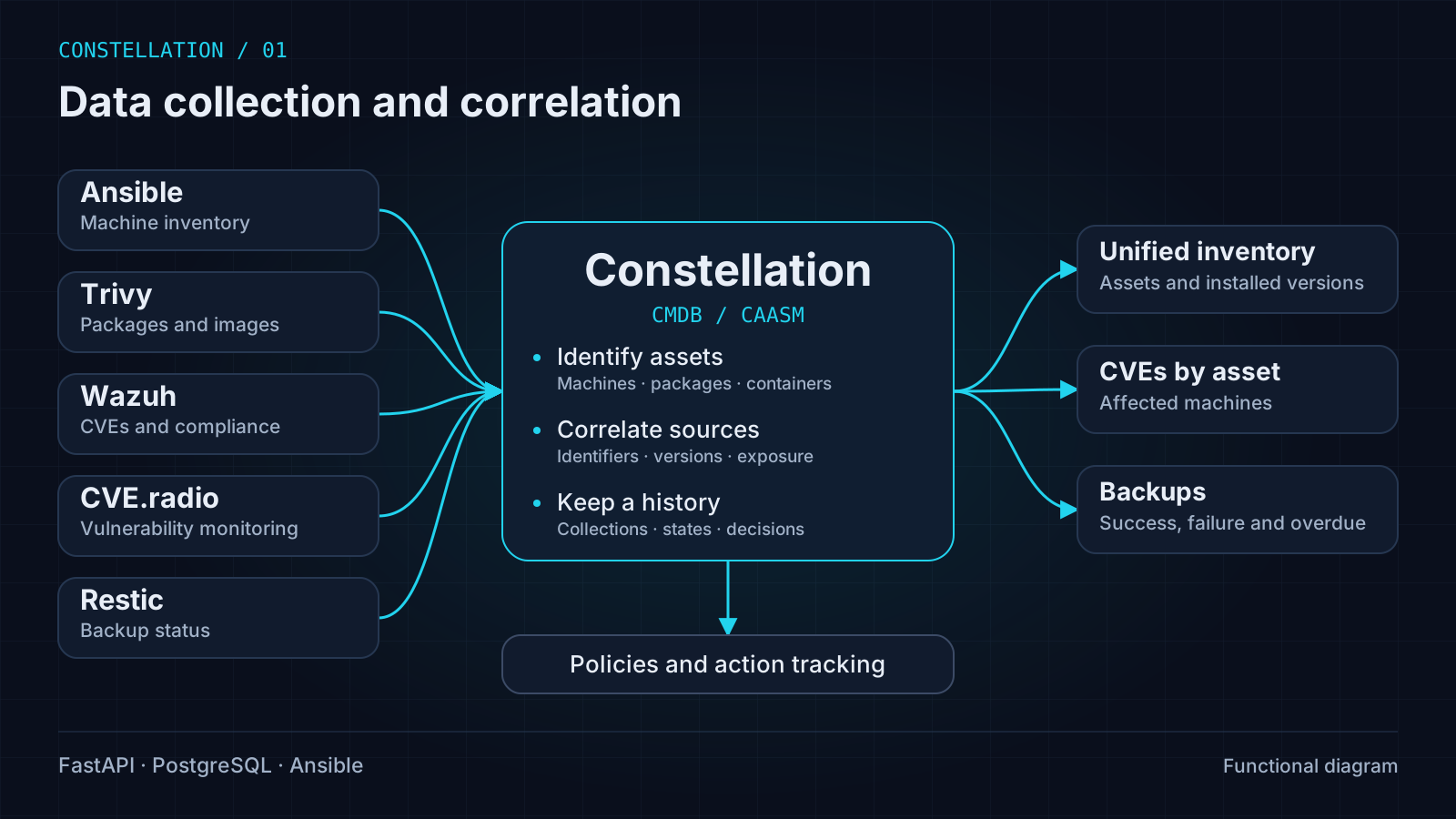
Ansible, Trivy, Wazuh, CVE.radio and Restic feed Constellation, which links inventory, CVEs by asset and backup status.

Linking machines, CVEs and backups

Ansible collects machines and installed versions. Trivy and Wazuh provide security findings, Restic provides backup status and CVE.radio provides vulnerability monitoring. Constellation correlates these sources to identify affected assets.

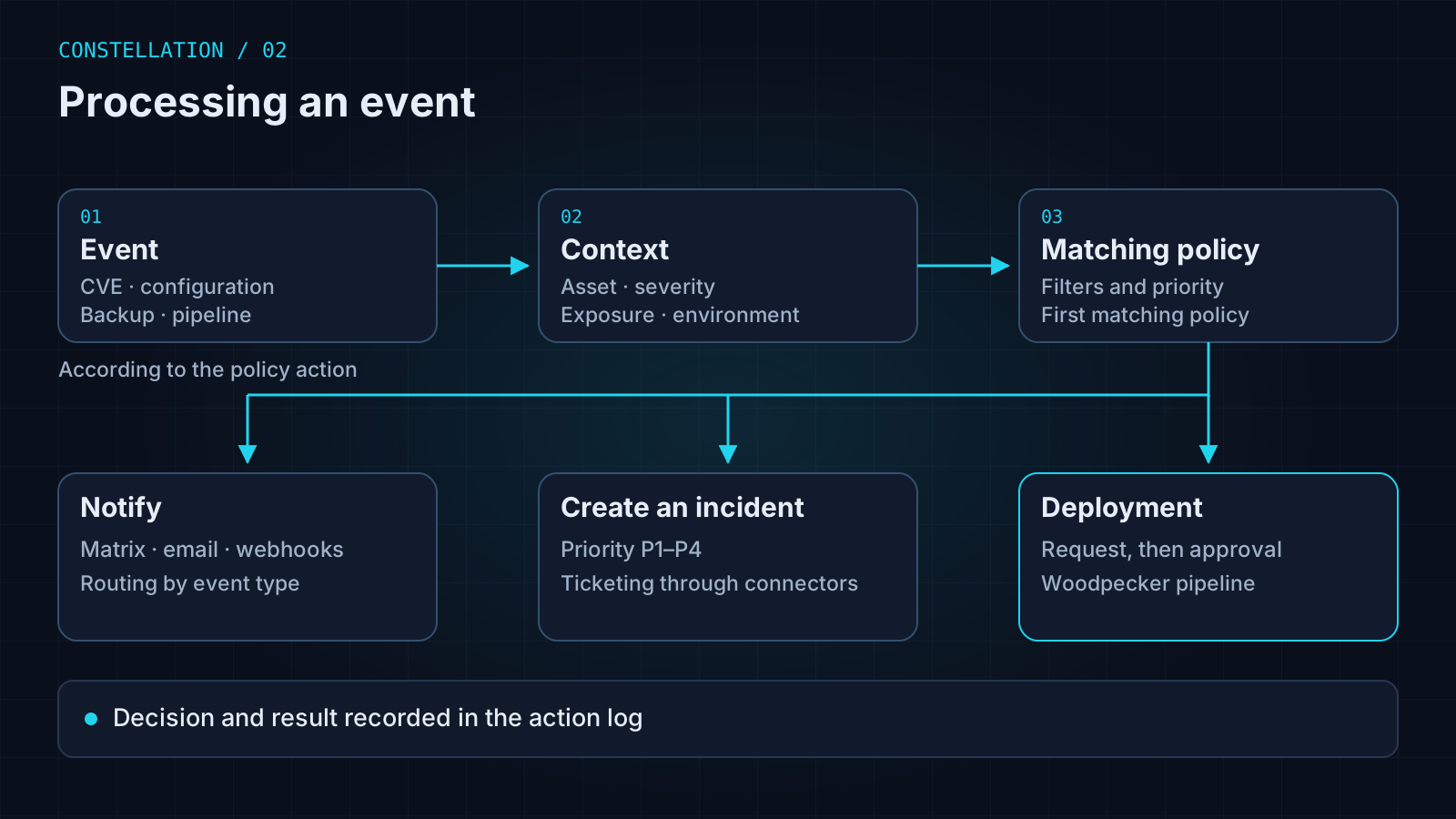
Event, context and matching policy, followed by notification, incident creation or a deployment request for approval. Each decision is logged.

Choosing an action from an event

The engine evaluates events against the asset, severity, exposure and environment. The first matching policy can notify, open an incident or create a deployment request. Deployment requires human approval; decisions and their results remain in the action log.

I develop Constellation to bring together the information needed for operations: machines and installed versions, vulnerability exposure and backup status. The project combines this data in one model to identify machines affected by a CVE.

The planned workflow uses existing CI/CD pipelines where a fix can be automated, and ticketing for other cases. Each asset should have a tracked status and an owner.

Collection uses tools already installed: Ansible for inventory, Trivy for images, Wazuh for detection, Restic for backups and CVE.radio for vulnerability monitoring. This avoids deploying another agent. Configurable connectors also cover code hosting, CI, registries and messaging.

Much of the work involves matching identifiers for the same machine across sources and deciding which source takes precedence when they disagree. The API exposes this data with its own role model and can sit behind an external identity provider.

Dependencies are locked and verified by hash. Dependency audits, static analysis and secret detection checks block CI on failure. Dependency declarations and the generated lock remain separate to make updates easier to review.
Achievements

Python dependencies hash-locked and audited in CI

Problem Pinning a dependency version does not verify the contents of the downloaded package. The build process also needs to detect modified packages and vulnerable dependencies.

  • - Lock files carrying sha256 hashes and --require-hashes installs in both the images and the pipeline: a substituted artifact will not install.
  • - Added blocking checks with pip-audit for dependencies, Bandit for code and detect-secrets for secrets.
  • - Kept dependency declarations separate from the generated lock file to make updates easier to review.

Data collection from existing tools

Problem Deploying another inventory agent on every machine would add maintenance and leave gaps on machines where it was not installed.

  • - Designed a shared model for Ansible, Trivy, Wazuh, CVE.radio and Restic data, covering inventory, vulnerabilities, exposure and backups. Replaced the vulnerability feed without changing this model.
  • - Configurable connectors for code hosting, CI, registries and messaging.
  • 19 views and more than 76 API endpoints